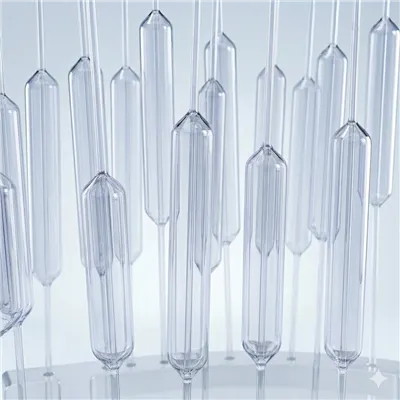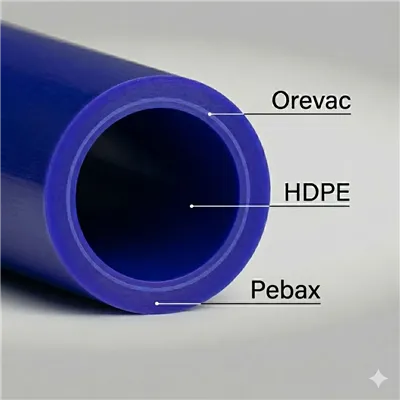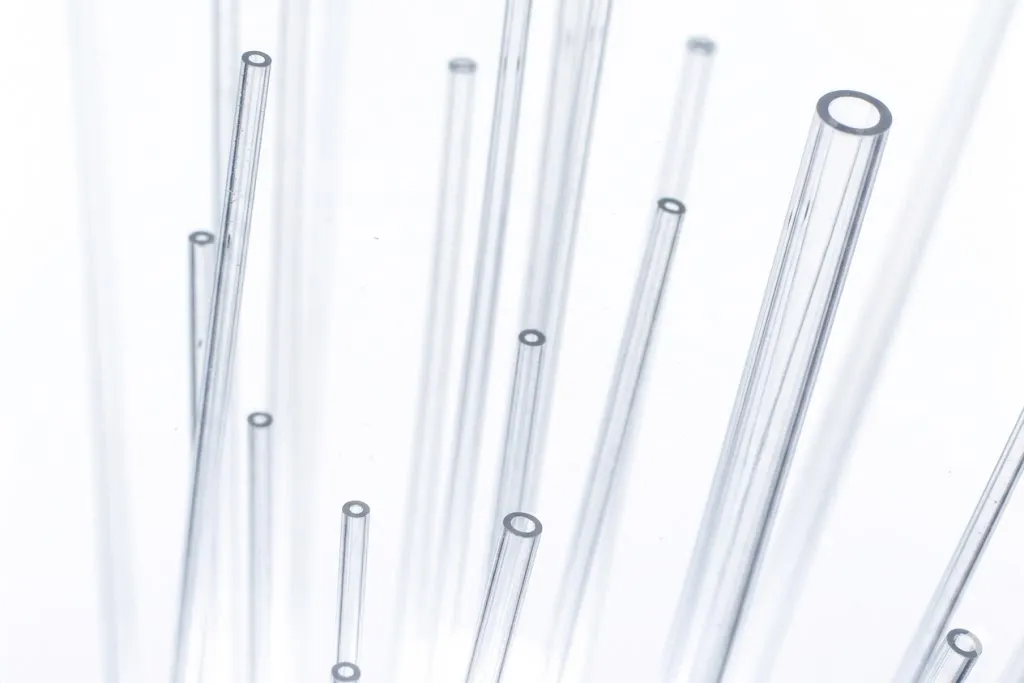
Shanghai CAREWE Medical is a leading medical-grade extruded tubing manufacturer, providing a wide range of tubing solutions to the medical industry. Our products include PTFE (Teflon) tubing, PTFE etching tubing, FEP heat shrink tubing, PET heat shrink tubing, PTFE heat shrink tubing, PVDF tubing, FEP tubing, PEEK tubing, PEBAX, Nylon, TPU, and many other tubes. Our team has over 10 years of experience in manufacturing tubing for catheter assemblies and we have now launched new products such as metal rings made of Pt Ir and tantalum rings, as well as enhancing our capabilities in secondary processing, such as PTFE etching tubes, multi-lumen tubes, printing on PTFE tubing and tip forming.
Why Choose Us
Rich experience
Our team has over 10 years of experience in manufacturing tubing for catheter assemblies and as well as enhancing our capabilities in secondary processing.
Good service
Our have provide exceptional service to our customers by offering high-quality products, outstanding customer support, and innovative technologies.
Advanced equipment
Our facilities include a large production area with a specialized cleanroom for extrusion and secondary processes.
Quality control
We operate state-of-the-art extrusion lines with the latest technology and strict quality control procedures to ensure that every product that leaves our facilities meets the highest standards of quality.
-
![PTFE Mandrel For Medical Applications]() PTFE Mandrel For Medical ApplicationsProduct Introduction PTFE mandrels are widely used in the manufacturing of medical tubing and interventional devices, providing dimensional support and internal diameter control during extrusion, heat-setting, reflow and forming processes.read more
-
![Teflon Beading]() Teflon BeadingTeflon beading, also known as Teflon coating, is a polymer coating that provides excellent corrosion resistance, non-stick properties, and heat resistance.read more
-
![PTFE Rod]()


What Is PTFE Beading?
PTFE Beading is a small diameter rod used in high temperature applications or applications where chemicals are present. Typical applications include pull cords, O-ring seals, spacersor even as a woven filter.
Benefits of PTFE Beading
Hydrophobic
PTFE is not only waterproof, but it also repels all water-based liquids. Its extremely smooth, non-porous surface makes it ideal for various applications, such as acting as a pipeline to transport chemicals.
Almost entirely chemically inert
PTFE does not react with almost any other chemical substance. Lack of chemical reaction is one of the main reasons it is such a good choice for cookware. Metals like aluminum, for example, easily corrode when they come into contact with acids, such as lemon juice.
High electrical resistance
PTFE does not conduct electricity very well, making it safe to use around electrical currents.
High dielectric strength
Similarly, PTFE is dielectric. This property makes it an excellent choice for wiring as it acts as an insulator.
High flexural strength
PTFE has high flexural strength. Flexural strength means it can bend quite a bit before breaking. Its flexibility gives it more durability and resistance to repeated movements, making it perfect for machine parts and hose linings.
Lowest friction of any solid material
In combination with its hydrophobic properties, PTFE’s low friction coefficient makes it the ideal material for non-stick cookware, pipelines, and windshield wipers.
Very large temperature operating range
PTFE has a large temperature range that it can work within. It has a melting point of 327°C and can work down to -200°C (the Teflon melting point and working freezing point are the same).
Types of PTFE Beading
Granular PTFE
This Teflon is a powder and it usually bolsters rods or tubes, which will be made through compression molding and then sintered. It is created through suspension polymerization.
Fine Powder PTFE
Also a powder and sometimes called emulsion-grade PTFE, this version of Teflon is finer in texture and made with the help of emulsion polymerization. The paste-like form of it gets extruded into wires, tubes, films, and fibers.
Micro Powder PTFE
Made of even finer particles, Teflon of this kind comes to be through direct polymerization. It can go through milling and grinding, as well, and it helps lessen friction on the surfaces that will be subject to wear and tear and flames.
Application of PTFE Beading


Electronics & wire insulation
The insulation of wiring in aerospace, electronics, and computer applications, such as hookup wire and coaxial cables are the most common use of PTFE as it accounts for nearly half of the total production.
PTFE is very applicable to this sector because it has outstanding dielectric properties, particularly low group velocity dispersion, notably at high radio frequencies, which makes it a good insulator in connector assemblies and cables, as well as printed circuit boards used at microwave frequencies.
This, combined with its high melting temperature property, makes it an excellent high-performance replacement for the weaker, higher dispersion, and lower melting-point polyethylene usually utilized in low-cost applications.
Automotive
Many automobiles use PTFE parts particularly in the air brake systems where over-braided hose constructions are required. It is also ideal for usage on the outside edge of air compressors and this is because PTFE can withstand extremely high temperatures. Teflon material also helps to prevent carbon particle deposits, making it useful in several automobile applications.
Aerospace
In the aerospace industry, major parts like the tubing hoses, hydraulic hoses, and gasoline hoses are all made of PTFE. Most times, they are braided with Kevlar for increased protection. PTFE is also popularly used in applications that require heat temperings, such as water, alcohol, oil, and gasoline. You will also find it in pneumatic and hydraulic systems that are frequently used in the aerospace industry.
Furthermore, in the aerospace sector, PTFE film is frequently used in the fabrication of carbon fiber composites and fiberglass composites. PTFE film is utilized as a barrier between the carbon or fiberglass portion being produced and the breather and bagging materials used to encapsulate the bonding. This film prevents non-production materials from adhering to the component being fabricated, which is usually sticky because of the carbon-graphite or fiberglass piles being pre-pregnant with bismaleimide resin.
Chemically inert liners
PTFE is commonly utilized as the liner in hoses for transferring chemicals, expansion joints, and product interchange lines, especially in applications involving acids, alkalis, or other chemicals. It is also found in refrigeration systems and steam pipelines.
Teflon PTFE typically replaces corrugated, stainless steel hoses. And this is solely due to PTFE’s extreme non-reactivity and high-temperature rating. Its frictionless properties let highly viscous liquids flow more freely, and it can be used in applications like brake lines.
Kitchen utensils
Anyone who has the slightest experience with cooking knows that food tends to adhere to pots, pans, and other similar surfaces.
Formerly, oils and sprays were used to eliminate all traces of food from the kitchen utensils, but since Teflon material properties were discovered to include non-sticking, it has been used in manufacturing kitchen utensils. The introduction of PTFE-treated kitchen utensils provided cooks with a new choice. PTFE-coated cookware creates a non-stick surface that allows food to slip right off easily.
Furthermore, PTFE can withstand high temperatures without losing its initial properties. They break down only at high temperatures higher than those that are expected in a food preparation setting. This feature of PTFE is very valuable in fast food restaurants or any other establishment where food must be prepared quickly. With this, pots and pans only need minimal washing for them to be used again.
Machine parts
Machine parts can be difficult to keep in good working conditions because they corrode and become unusable over time. In fact, even the passage of time alone is enough to cause any expensive machinery to deteriorate. But PTFE helps prevent this type of damage and extends the machine’s operational life.
The secret to this is in Teflon’s capability to lubricate. When the several moving elements of machines come in touch with one another, they tend to generate a lot of friction. If this is left unchecked, it can result in major damage over time. But Teflon helps to minimize the friction to some extent, which prevents wear and tear.
PTFE is perfect for making machine parts, like gears, bushings, joints, slide plates, pipe linings, bearings, O-rings, and saw blades because of its incredibly low friction quality. In the operation of these parts, there is bound to be a lot of sliding movement, but PTFE’s low friction and self-lubricating property reduce all possible bad effects, thereby extending the life of the machine.
Medicine
PTFE products have been on the market for more than 30 years in both the domestic and foreign medical industries. As a matter of fact, PTFE products have become widely used in all fields of surgery, and it is the world’s leading material used in administering grafts.
Also, PTFE coatings are crucial because they provide over-braid sealing, strength, and simplicity when cleaning and purging medical systems.
All materials used in the medical industry are required to meet very high standards because to some extent, they have the power over life and death. However, PTFE does not just meet these standards, it surpasses them. PTFE’s chemical inertness makes it ideal for fabricating artificial body parts.
How to Maintain PTFE Beading
When not in use, PTFE Beading should be stored in a clean, dry, and well-ventilated area. Avoid exposing them to extreme temperatures, direct sunlight, or corrosive chemicals. Proper storage conditions will help preserve the Beading integrity and prevent degradation over time.
How Is PTFE Made?
The suspension polymerization
A reaction chamber is prepped by filling it with purified water and an initiator agent that is a chemical that helps kick-start the polymer forming. The TFE from the previous process is pumped into the reaction chamber where it begins to polymerize by free radical polarization where the TFE monomers are easily split and when they split, two electrons become free and are the free radicals, these electrons quickly try find something to bond to and thus bonding to another molecule that splits and has free radicals propagating to form long polymers with now single bonded carbon. These propagations carry on until the free radical on the end of the chain either couples to another chain or bonds to another fluorine atom. The resultant PTFE floats to the top of the reaction chamber as small solid white grains. During this whole process the reaction chamber is shaken by a mechanical mechanism and cold purified water is circulated through the chamber to keep the temperature low and counteract the heat the chemical reactions give off. When enough PTFE has been made the flow of TFE is shut off and the purified water is drained leaving all the white flakes of PTFE behind. The PTFE is dried in an oven and then sent through a mill where it is pulverized into a fine white powder. It is now either left as this fine powder or is made into small PTFE pellets.
Dispersion polymerization
The dispersion method is very similar to the polymerization. It also starts with purified water and an initiator agent pumped into a reaction chamber. The TFE liquid is also pumped into the chamber and the polarization process occurs exactly the same was as in the polymerization. But now instead of the chamber being shaken mechanically, it is gently agitated and this causes tiny beads of PTFE to form and fall to the bottom of the chamber. During the process water is filtered out and the end result is a milky white paste called PTFE dispersion. This paste is extremely useful when it is needed to layer on material or coat something in PTFE. The PTFE dispersion can also be dried and milled into a fine powder.
Our Factory
Shanghai CAREWE Medical is a trusted partner in the medical industry, offering high-quality tubing solutions with unparalleled customer support. Whether you need custom extruded tubing solutions, secondary processing, or standard tubing products, we are committed to meeting your needs and exceeding your expectations. Let us help you achieve your medical breakthroughs today.

Certifications


FAQ
We're professional PTFE beading manufacturers and suppliers in China, specialized in providing high quality custom service. We warmly welcome you to wholesale high-grade PTFE beading from our factory.
PTFE Rod, Teflon Beading, ptfe beading-
![Medical Hypotube For Catheter]() Medical Hypotube For CatheterAs a critical component of minimally invasive interventional catheter delivery systems, the quality of aread more
-
![Medical Balloon Extrusion]() Medical Balloon ExtrusionINTERVENTIONAL COMPONENT SOLUTIONS High-Performance Medical Balloon Tubing / Extrusion Precision-Engineered Thin-Wallread more
-
![Co-Extruded Tubing]() Co-Extruded TubingHigh-Precision Co-Extruded Tubing for PTCA Balloon Catheters Multi-Layer Co-Extruded Tubing: High-Performance Solutionsread more
-
![Balloon Tubing]() Balloon TubingMedical-Grade Balloon Tubing: Precision Multi-Layer & Single-Lumen Extrusions At Carewe Medical, we understand thatread more
-
![Tantalum Marker Bands]() Tantalum Marker BandsShanghai CAREWE Medical's Tantalum Marker Bands are precision radiopaque rings designed for medical device development.read more
-
![Radiopaque Marker Bands]() Radiopaque Marker BandsRadiopaque marker bands are critical components embedded in PTCA (Percutaneous Transluminal Coronary Angioplasty)read more