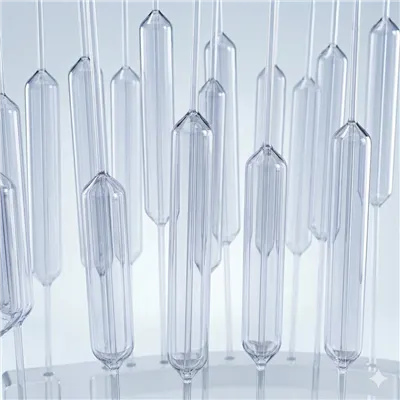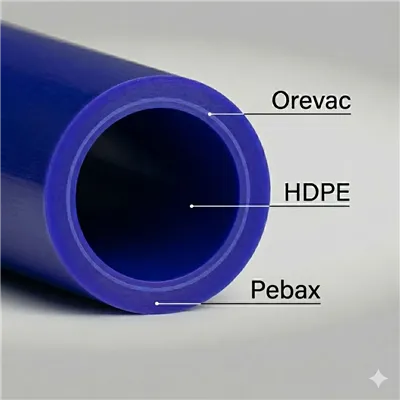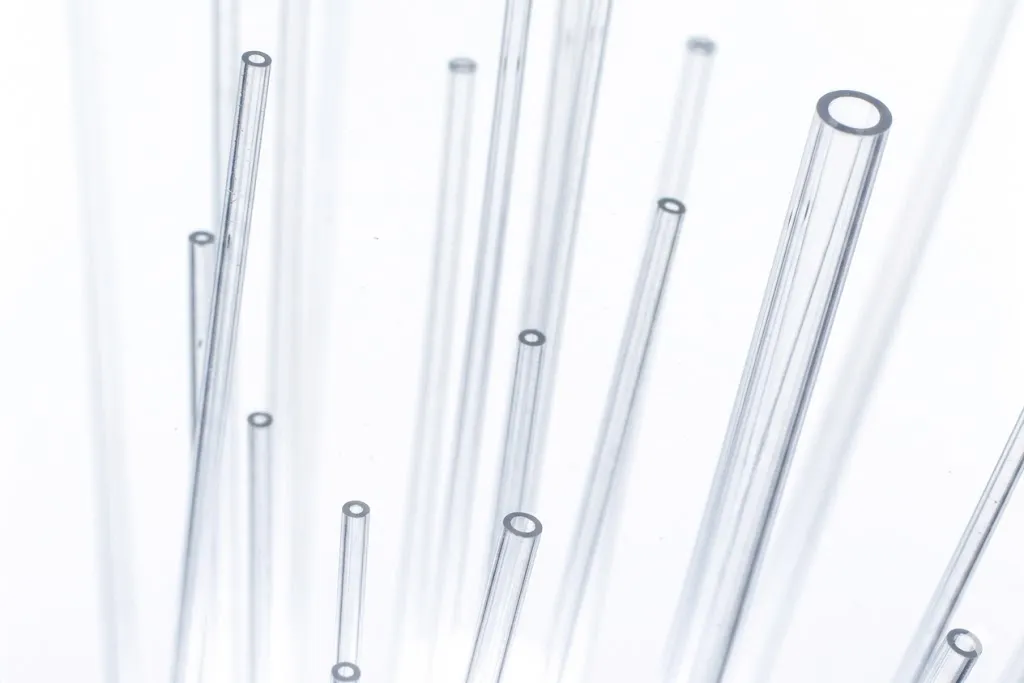
Shanghai CAREWE Medical is a leading medical-grade extruded tubing manufacturer, providing a wide range of tubing solutions to the medical industry. Our products include PTFE (Teflon) tubing, PTFE etching tubing, FEP heat shrink tubing, PET heat shrink tubing, PTFE heat shrink tubing, PVDF tubing, FEP tubing, PEEK tubing, PEBAX, Nylon, TPU, and many other tubes. Our team has over 10 years of experience in manufacturing tubing for catheter assemblies and we have now launched new products such as metal rings made of Pt Ir and tantalum rings, as well as enhancing our capabilities in secondary processing, such as PTFE etching tubes, multi-lumen tubes, printing on PTFE tubing and tip forming.
Why Choose Us
Rich experience
Our team has over 10 years of experience in manufacturing tubing for catheter assemblies and as well as enhancing our capabilities in secondary processing.
Good service
Our have provide exceptional service to our customers by offering high-quality products, outstanding customer support, and innovative technologies.
Advanced equipment
Our facilities include a large production area with a specialized cleanroom for extrusion and secondary processes.
Quality control
We operate state-of-the-art extrusion lines with the latest technology and strict quality control procedures to ensure that every product that leaves our facilities meets the highest standards of quality.
-
![Tungsten Carbide Tubing]() Tungsten Carbide TubingTungsten carbide tubing for medical applications can be found from specialized manufacturers and suppliers. It is important to ensure that the tubing meets applicable medical standards and regulations.read more
Tungsten Carbide TubingTungsten carbide tubing for medical applications can be found from specialized manufacturers and suppliers. It is important to ensure that the tubing meets applicable medical standards and regulations.read more -
![Baso4 Loaded Tubing]() Baso4 Loaded TubingBaso4 Radiopaque tubing is a kind of medical material that has become increasingly popular in recent years. It is a tubing that contains barium sulfate, which is a type of radiopaque substance that is easily visible on X-ray images.read more
Baso4 Loaded TubingBaso4 Radiopaque tubing is a kind of medical material that has become increasingly popular in recent years. It is a tubing that contains barium sulfate, which is a type of radiopaque substance that is easily visible on X-ray images.read more


What Is Tungsten Tubing?
A tungsten tube, also called a tungsten pipe, is a type of cylinder-shaped tube made from the chemical element tungsten. Tungsten tubes are really strong and durable. Tungsten Tube is highly valued for its robustness and high melting point, making it suitable for environments with extreme temperatures. It is often used in furnaces, aerospace designs, and electronics for its durability and heat resistance.
Benefits of Tungsten Tubing
Resistance to high temperature
Among all pure metals, tungsten boasts the highest melting point at 3,244°c. This exceptional property allows it to be utilized in environments with extremely high temperatures where other metals would fail.
High density
Tungsten has a high density of 19 g/cm³, attributed to its microcrystalline structure. This characteristic makes it valuable in applications that need substantial mass within compact dimensions.
Low thermal expansion
Among all pure metals, tungsten has the lowest coefficient of thermal expansion. Unlike steel, tungsten remains highly stable at elevated temperatures and does not change in form or size.
Electronic structure
Due to its excellent conductivity and general inertness, tungsten is commonly employed in electrical devices that operate under high levels of radiation. It also serves as an ideal material for electrodes in the electrolysis of various substances.
Corrosion resistance
Tungsten's exceptional resistance to corrosion allows it to be used in diverse applications where corrosion is a concern. It performs well in outdoor environments exposed to water and acids. Typical uses of tungsten include fishing lures, ship construction, and certain types of jewelry.
Fabrication strengthening
Despite its strength, tungsten can be drawn into extremely thin wires without breaking. For example, the filaments in light bulbs are made from tungsten, allowing them to endure high temperatures while remaining functional.
1.Thermocouple sheaths
2.Semiconductors
3.Medical devices
4.Nuclear and aerospace critical applications
5.Advanced electronics
6.Solar thermal management technologies
7.High-temperature furnace parts

Material of Tungsten Tubing

A hard, rare metal under standard conditions when uncombined, tungsten is found naturally on Earth only in chemical compounds. It was identified as a new element in 1781, and first isolated as a metal in 1783. Its important ores include wolframite and scheelite. The free element is remarkable for its robustness, especially the fact that it has the highest melting point of all the elements. Its high density is 19.3 times that of water, comparable to that of uranium and gold, and much higher (about 1.7 times) than that of lead. Polycrystalline tungsten is an intrinsically brittle and hard material, making it difficult to work. However, pure single-crystalline tungsten is more ductile, and can be cut with a hard-steel hacksaw.
Process of Tungsten Tubing
Sintering
Sintering is a key method in the manufacturing of tungsten tubes. It involves compacting tungsten powder into a green compact, followed by a high-temperature treatment (typically in a vacuum or hydrogen atmosphere) just below the melting point of tungsten. This process allows the tungsten particles to bond, resulting in a solid, dense structure.
In tube production, sintering is employed after pressing or forming processes. The compacted tungsten powder is shaped into the initial tube form, and sintering imparts strength and cohesion to the structure.
Machining
Machining involves the removal of material through various processes such as cutting, drilling, and turning to achieve specific dimensions, shapes, and surface finishes. Precision machining is crucial to meet tight tolerances and quality requirements.
After sintering, tungsten tubes often undergo precision machining to achieve final dimensions and features. This may include cutting the tube to the desired length, drilling holes, and ensuring the tube meets the required specifications.
Welding
Welding is a joining process that involves the fusion of two or more pieces of material to create a unified structure. Tungsten inert gas (TIG) welding is commonly used for tungsten materials due to its high melting point. Welding may be used to join tungsten tubes or to attach additional components to the tubes.
Powder metallurgy and forming
The primary methods for tungsten tube manufacturing involve powder metallurgy, pressing, and forming processes, with sintering as a crucial step within these methods. These processes help shape tungsten into the desired tube structure.
Wash with soap and water
Tungsten is water-resistant, and when your tungsten products has become dirty, you can simply soak it in a solution of warm water and a few drops of household detergent or mild liquid soap. Let the products soak for around 15 minutes.
Scrub lightly
If your products still appears dirty after soaking, use a soft cloth or a toothbrush to scrub off any of the remaining buildup of grime or dirt. If your products has grooves, or engravings, make sure to scrub them more thoroughly.
Remove greasy stains
If your products feels greasy, which is typically due to residue left by lotion or oils, use a cotton swab and rubbing alcohol to remove the grease stains. Then, wash the products as described above.
Rinse with clean water
Rinse your products with clean water and wipe it off with a clean, dry cloth.
Store your tungsten products properly
Store your tungsten products properly by keeping it in a fabric lined container or pouch.
Do not use harsh chemicals
It is not advisable to use harsh chemicals to clean your tungsten products. These chemicals, which include bleach, ammonia, and other commercial cleaners, can damage your tungsten productsand cause permanent stains and spotting. They may also weaken the structure of the metal.
In the medical field, precision and reliability are not just desired—they’re essential. Tungsten tubes are employed in various medical devices due to their strength and biocompatibility. In radiation therapy equipment, tungsten’s high density makes it an excellent choice for shielding against radiation, protecting both the patient and the medical staff. Furthermore, tungsten tubes are utilized in the production of fine medical needles and catheter components, where their rigidity and precision are crucial. The ability to maintain sterility and withstand repeated sterilization processes without degrading is another reason tungsten tubes are favored in healthcare.

Tungsten Tube Properties (Theoretical)
|
Molecular Weight |
183.85 |
|
Appearance |
Silvery |
|
Melting Point |
3410 °C |
|
Boiling Point |
5900 °C |
|
Density |
19.3 g/cm3 |
|
Solubility in H2O |
N/A |
|
Electrical Resistivity |
5.65 μΩ ·m (27 °C) |
|
Electronegativity |
1.7 Paulings |
|
Heat of Fusion |
35.3 kJ/mol |
|
Heat of Vaporization |
806.7 kJ/mol |
|
Poisson's Ratio |
0.28 |
|
Specific Heat |
0.133 J/g mol (20 °C) |
|
Tensile Strength |
750 MPa |
|
Thermal Conductivity |
1.73 W/m K |
|
Thermal Expansion |
(25 °C) 4.5 µm·m-1·K-1 |
|
Vickers Hardness |
3430 MPa |
|
Young's Modulus |
411 GPa |
Difference Between Tungsten and Titanium

Which material is the strongest depends on where it is going to be used. There may be an application where a high yield strength is vital but the compressive strength is a non-factor. Understanding the application is essential to selecting the proper materials. In terms of tensile strength, tungsten is the strongest out of any natural metal (142,000 psi). But in terms of impact strength, tungsten is weak - it's a brittle metal that's known to shatter on impact. Titanium, on the other hand, has a tensile strength of 63,000 psi But when you figure in titaniums density and make a pound-for -pound comparison, it beats tungsten. Looking at titanium in terms of
compression strength. it scores much lower on the Mohs scale of hardness.
Discovery of Tungsten
In 1779 Irish chemist Peter Woulfe deduced the existence of a new element – tungsten – from his analysis of the mineral wolframite (an iron manganese tungstate mineral).
Tungsten was isolated as tungstic oxide (WO3) in 1781, in Sweden, by Carl W. Scheele from the mineral scheelite (calcium tungstate). However he did not have a suitable furnace to reduce the oxide to the metal.
Tungsten was finally isolated by brothers Fausto and Juan Jose de Elhuyar in 1783, in Spain, by reduction of acidified wolframite with charcoal.
The element name comes from the Swedish words ‘tung sten’ meaning heavy stone.
The chemical symbol, W, comes from the original name of the element, Wolfram.
Tungsten is one of the five major refractory metals (metals with very high resistance to heat and wear).
Our Factory
Shanghai CAREWE Medical is a trusted partner in the medical industry, offering high-quality tubing solutions with unparalleled customer support. Whether you need custom extruded tubing solutions, secondary processing, or standard tubing products, we are committed to meeting your needs and exceeding your expectations. Let us help you achieve your medical breakthroughs today.

Certifications


FAQ
We're professional tungsten tubing manufacturers and suppliers in China, specialized in providing high quality custom service. We warmly welcome you to wholesale high-grade tungsten tubing from our factory.
tungsten tubing, Baso4 Loaded Tubing, Tungsten Carbide Tubing-
![Medical Balloon Extrusion]() Medical Balloon ExtrusionINTERVENTIONAL COMPONENT SOLUTIONS High-Performance Medical Balloon Tubing / Extrusion Precision-Engineered Thin-Wallread more
Medical Balloon ExtrusionINTERVENTIONAL COMPONENT SOLUTIONS High-Performance Medical Balloon Tubing / Extrusion Precision-Engineered Thin-Wallread more -
![Co-Extruded Tubing]() Co-Extruded TubingHigh-Precision Co-Extruded Tubing for PTCA Balloon Catheters Multi-Layer Co-Extruded Tubing: High-Performance Solutionsread more
Co-Extruded TubingHigh-Precision Co-Extruded Tubing for PTCA Balloon Catheters Multi-Layer Co-Extruded Tubing: High-Performance Solutionsread more -
![Balloon Tubing]() Balloon TubingMedical-Grade Balloon Tubing: Precision Multi-Layer & Single-Lumen Extrusions At Carewe Medical, we understand thatread more
Balloon TubingMedical-Grade Balloon Tubing: Precision Multi-Layer & Single-Lumen Extrusions At Carewe Medical, we understand thatread more -
![Tantalum Marker Bands]() Tantalum Marker BandsShanghai CAREWE Medical's Tantalum Marker Bands are precision radiopaque rings designed for medical device development.read more
Tantalum Marker BandsShanghai CAREWE Medical's Tantalum Marker Bands are precision radiopaque rings designed for medical device development.read more -
![Radiopaque Marker Bands]() Radiopaque Marker BandsRadiopaque marker bands are critical components embedded in PTCA (Percutaneous Transluminal Coronary Angioplasty)read more
Radiopaque Marker BandsRadiopaque marker bands are critical components embedded in PTCA (Percutaneous Transluminal Coronary Angioplasty)read more -
![Platinum Iridium Medical Marker Ring]() Platinum Iridium Medical Marker RingMarker rings are critical components integrated into stent delivery catheters to enhance visibility under X-ray andread more
Platinum Iridium Medical Marker RingMarker rings are critical components integrated into stent delivery catheters to enhance visibility under X-ray andread more