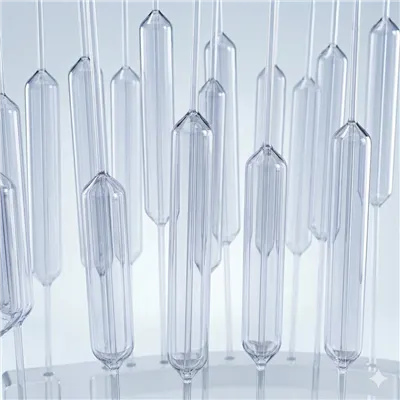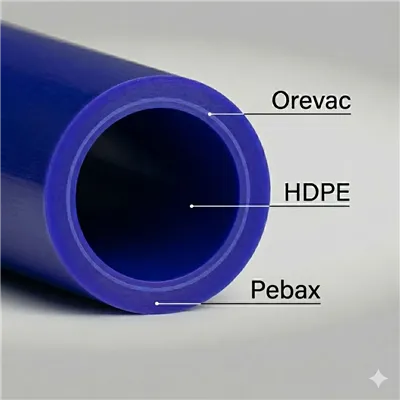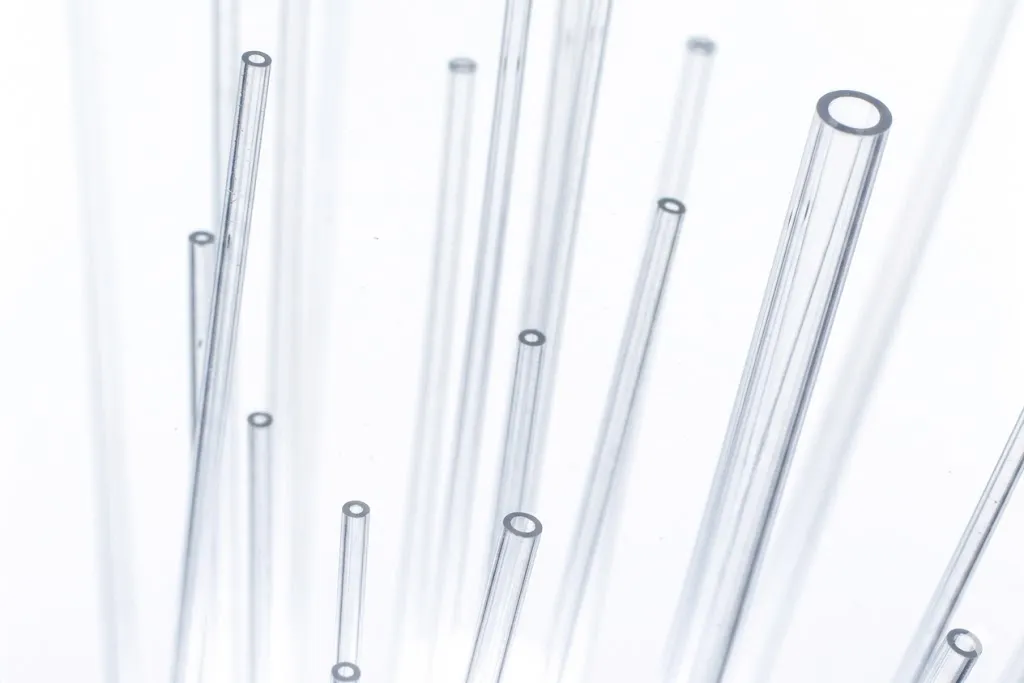
Shanghai CAREWE Medical is a leading medical-grade extruded tubing manufacturer, providing a wide range of tubing solutions to the medical industry. Our products include PTFE (Teflon) tubing, PTFE etching tubing, FEP heat shrink tubing, PET heat shrink tubing, PTFE heat shrink tubing, PVDF tubing, FEP tubing, PEEK tubing, PEBAX, Nylon, TPU, and many other tubes. Our team has over 10 years of experience in manufacturing tubing for catheter assemblies and we have now launched new products such as metal rings made of Pt Ir and tantalum rings, as well as enhancing our capabilities in secondary processing, such as PTFE etching tubes, multi-lumen tubes, printing on PTFE tubing and tip forming.
Why Choose Us
Rich experience
Our team has over 10 years of experience in manufacturing tubing for catheter assemblies and as well as enhancing our capabilities in secondary processing.
Good service
Our have provide exceptional service to our customers by offering high-quality products, outstanding customer support, and innovative technologies.
Advanced equipment
Our facilities include a large production area with a specialized cleanroom for extrusion and secondary processes.
Quality control
We operate state-of-the-art extrusion lines with the latest technology and strict quality control procedures to ensure that every product that leaves our facilities meets the highest standards of quality.
-
![PTFE Liner Thin-Walled Tube]() PTFE Liner Thin-Walled TubePTFE liner thin-walled tube is a type of product widely used in medical equipment applications. This product is known for its superior properties and has become an essential part of the medical industry.read more
PTFE Liner Thin-Walled TubePTFE liner thin-walled tube is a type of product widely used in medical equipment applications. This product is known for its superior properties and has become an essential part of the medical industry.read more -
![PTFE Ultra-thin Etched Tubing]() PTFE Ultra-thin Etched TubingPTFE thin-walled tubing is a type of medical-grade tubing that is made from polytetrafluoroethylene (PTFE) material. Compared to other fluoropolymer materials, PTFE has a unique set of properties that make it ideal for use in medicalread more
PTFE Ultra-thin Etched TubingPTFE thin-walled tubing is a type of medical-grade tubing that is made from polytetrafluoroethylene (PTFE) material. Compared to other fluoropolymer materials, PTFE has a unique set of properties that make it ideal for use in medicalread more -
![Ptfe Liners]() Ptfe LinersMedical PTFE liner tubing, also known as PolyTetraFluoroEthylene liner tubing, is a high-performance medical grade tubing material that has many unique benefits and applications. This high-quality tubing is made from PTFE, which is aread more
Ptfe LinersMedical PTFE liner tubing, also known as PolyTetraFluoroEthylene liner tubing, is a high-performance medical grade tubing material that has many unique benefits and applications. This high-quality tubing is made from PTFE, which is aread more -
![Ptfe Lined Hose]() Ptfe Lined HoseEtched PTFE heat shrink tube is a highly advanced product that has found wide-ranging applications in medical devices. It is a tube made of polytetrafluoroethylene (PTFE) material that has undergone a process of etching.read more
Ptfe Lined HoseEtched PTFE heat shrink tube is a highly advanced product that has found wide-ranging applications in medical devices. It is a tube made of polytetrafluoroethylene (PTFE) material that has undergone a process of etching.read more -
![PTFE Heat Shrink Tubing]() PTFE Heat Shrink TubingShrink ratio: 1.7: 1, 4: 1. Flammability: VW-1. Standard color: clear/transparent. Minimum Recovered I.D:Ф0.1016mm.read more
PTFE Heat Shrink TubingShrink ratio: 1.7: 1, 4: 1. Flammability: VW-1. Standard color: clear/transparent. Minimum Recovered I.D:Ф0.1016mm.read more -
![Etched Ptfe Liner]() Etched Ptfe LinerThe flexibility and strength of PTFE Liner make it an ideal material for catheter tubes. The smooth surface of PTFE Liner reduces friction, making it easier to insert the catheter and reducing the risk of injury.read more
Etched Ptfe LinerThe flexibility and strength of PTFE Liner make it an ideal material for catheter tubes. The smooth surface of PTFE Liner reduces friction, making it easier to insert the catheter and reducing the risk of injury.read more -
![Thin-walled Tubing]() Thin-walled TubingPTFE (polytetrafluoroethylene) is a synthetic polymer that has a wide range of applications due to its unique properties, including high temperature resistance, chemical resistance, non-stick surface, and low friction coefficient.read more
Thin-walled TubingPTFE (polytetrafluoroethylene) is a synthetic polymer that has a wide range of applications due to its unique properties, including high temperature resistance, chemical resistance, non-stick surface, and low friction coefficient.read more -
![PTFE Liner Tubing]() PTFE Liner TubingIt can be in direct contact with human skin, mainly used in medical devices applications which required high temperature performance.read more
PTFE Liner TubingIt can be in direct contact with human skin, mainly used in medical devices applications which required high temperature performance.read more -
![PTFE Catheter Liner]() PTFE Catheter LinerPTFE liner, also known as polytetrafluoroethylene liner, is a highly versatile and resilient material that finds extensive use in the medical field due to its excellent properties.read more
PTFE Catheter LinerPTFE liner, also known as polytetrafluoroethylene liner, is a highly versatile and resilient material that finds extensive use in the medical field due to its excellent properties.read more


What Is PTFE Liner?
PTFE catheter liner, also known as Polytetrafluoroethylene tubing, is a high-performance polymer designed to enhance the functionality of guiding catheters. Its low friction coefficient makes it an ideal material for catheter linings, facilitating the smooth passage of other medical equipment through the catheter.
1. These liners are used for a wide variety of medical procedures, including joint replacement surgery and cardiovascular intervention.
2. PTFE liners are highly durable and can withstand extreme temperatures, making them perfect for use in minimally invasive medical procedures.
3. PTFE liners can be easily molded into any shape, allowing them to be used in complex medical procedures.
4. These liners are made from Teflon, which is renowned for its strength and non-stick qualities, making them ideal for applications in sensitive medical environments.
5. PTFE liners are also resistant to most chemicals, making them a safer choice for the medical device or component production.
6. They are extremely lightweight, making them easy to install in confined areas with limited access and allowing them to be used in many different types of medical equipment.
7. They provide superior protection against severe wear and tear during frequent use. This makes them useful for medical devices such as catheters, stents, and guidewires, as these tools require reliable protection against abrasion and damage.
Application of PTFE Liner
The wide applications of PTFE inner lining tubes include: guide tubes, deflectable tubes, controllable tubes, equipment conveying systems, etc Waiting for various purposes!
Material of PTFE Liner
Polytetrafluoroethylene, also known as Teflon®, is made with four ingredients — fluorspar, hydrofluoric acid, chloroform, and water, which are combined in a chemical reaction chamber heated to between 1094-1652°F (590-900°C). Creating PTFE involves 2 main phases and a series of reactions.
Process of PTFE Liner
PTFE, or polytetrafluoroethylene, is a synthetic fluoropolymer of tetrafluoroethylene that is known for its non-stick properties and high chemical resistance. PTFE lining is a process in which a thin layer of PTFE is applied to the inner surface of a container or device to create a non-stick surface. There are several methods that can be used to apply PTFE lining, including:
Skiving
This method involves cutting thin sheets of PTFE and bonding them to the surface using heat and pressure.
Extrusion
This method involves melting the PTFE and extruding it onto the surface in a thin layer.
Spray coating
This method involves spraying a fine mist of PTFE onto the surface and then heating it to bond the PTFE to the surface.
Electron beam
This method involves using an electron beam to vaporize PTFE, which is then deposited onto the surface in a thin layer.
Regardless of the method used, the PTFE lining process typically involves cleaning the surface to be lined, applying the PTFE in a thin layer, and then heating the PTFE Liner to bond it to the surface. The PTFE lining is then allowed to cool and harden, after which it is inspected for defects and finished as needed.
How to Maintain PTFE Liner
Cleaning
Use mild detergents: Clean the PTFE liner regularly with mild detergents and warm water. Avoid harsh chemicals that could degrade the material.
Inspect regularly
Check for damage: Regularly inspect the liner for signs of wear, cracks, or punctures. Early detection can prevent failures and potential hazards.
Storage
Cool and dry: Store PTFE liners in a cool, dry place away from direct sunlight and heat sources. Extreme temperatures can affect the integrity of the material.
Pure or virgin PTFE can deform badly under a load, but the use of fillers can help with this, though it should be noted that not all filled PTFE is suitable for use with food.
Adding a filler to PTFE can increase its strength, improve resistance to abrasion, add electrical conductivity and more; however, adding fillers can also reduce some of the advantageous PTFE properties, such as chemical resistance which will be limited by that of the filler.
Fillers used can range from glass in various percentages, stainless steel, molybdenum disulphide, carbon or graphite, depending on which properties are to be improved.

An answer to situations where the performance envelope cannot be covered by metal-to-metal bearings is to consider PTFE lined bearings. Here, the lubricant configuration is such that it functions as the load carrying element of the bearing. PTFE bearings may be specified under all or some of the following situations:
- Where lubrication is undesirable, difficult to perform, or impossible.
- Where loads are high and angular movement is low.
- Where space is limited.
- Where vibration is present.
- Where temperature of the environment renders greasing infeasible.
- Where a joint must remain static for an extended period of time before movement is initiated.
- Where friction in a greased bearing would be so high as to render the joint area useless after a limited number of cycles or impose an unacceptable fatigue situation.
- Where, in static joints, fretting is a problem.
While PTFE lined bearings can do an excellent job in many areas, there have been areas of misapplication. Also, there exist some misunderstandings regarding life and failure as applied to hardware of this type. Following are important clarifications concerning these products:
- The PTFE lined bearing starts life with a finite rotational pre-load torque or clearance.
- This rotational pre-load torque always decreases with bearing usage and clearance always increases with usage.
- A bearing may be said to have failed if the rotational pre-load torque drops below some specified value. This is always a systems application characteristic.
- A bearing may be said to have failed when the clearance generated by wear exceeds some specified value. This, again, is always some specified systems characteristic.
- A bearing may be said to have failed if the liner wears through enough to permit the ball to contact the race.
- No bearing, including PTFE lined bearings, will last forever. The “lifetime” lubrication concept applies to the bearing alone, not to the end usage item.
- The presence of liner debris on a bearing is not a definitive indication of failure.
- PTFE lined bearings tend to telegraph their impending failure by increased radial and axial play.
When evaluating the probable service life of a PTFE lined bearing application, there are some factors that do not appear in the PV = K relationship, (seePVFactor). Some considerations for a given application might include:
- Surface sliding speed
- Maximum ambient temperature
- Size of the heat sink
- Acceptable friction levels
- Load per unit of area, or liner stress level
- Mode of load application; i.e., the duty cycle
- Service alignment accuracy, particularly with respect to sleeve and flanged bearings
- Surrounding atmosphere
- Tolerable wear rate
- Surface finish of the bearing mating shaft and the shaft material
Ways to Avoid Common Problems with PTFE Lined Pipes


Thermal shock
Thermal shock, also known as thermal cycling, is a common problem in PTFE-lined pipes. It occurs due to the sudden temperature fluctuations in the process fluid, leading to the expansion and contraction of the steel pipe. This can cause the PTFE lining to crack or delaminate from the steel pipe, leading to leakages, and further damaging the industrial process. To prevent thermal shock, you need to ensure that the pipe is designed with expansion loops or flexible joints to absorb the thermal stress.
Chemical incompatibility
PTFE is resistant to most chemicals, but certain chemicals like molten alkalis, fluorine, and fluorine compounds may cause swelling or excessive softening of PTFE lining. Also, due to the porosity of PTFE lining, certain chemicals can penetrate through the lining and cause damage to the steel pipe. It is essential to ensure that PTFE is compatible with the process fluid before installing the lined pipe. A chemical compatibility chart should be consulted before choosing the material for the lining.
Mechanical damage
Mechanical damage to the PTFE lining can lead to leakage and further damage to the industrial process. Damage can occur during installation, handling, or operation of equipment. It is essential to avoid dragging the pipe on the ground or allowing sharp or pointed objects to come into contact with the lining. PTFE lined pipes should always be transported and handled carefully.
Poor quality linings
Poor quality linings can lead to premature failure of the lined pipe and significant disruptions in industrial processes. The quality of the lining depends upon the quality of the PTFE resin, pigments, fillers, and other additives used. Ensure that the lining is from a reputable manufacturer, and the manufacturing process is reliable. The PTFE lining must be controlled and monitored during the manufacturing process to ensure consistent quality and performance.
Improper installation
Improper installation can result in the distortion of the lining and the steel pipe, leading to leakage and other problems. The lining should be installed using specialized tools and equipment to ensure proper adhesion of the PTFE to the steel pipe, avoiding air pockets, and achieving even thickness. Additionally, ensure that all gaskets, O-rings, and seals are installed correctly to prevent leaks.
Our Factory
Shanghai CAREWE Medical is a trusted partner in the medical industry, offering high-quality tubing solutions with unparalleled customer support. Whether you need custom extruded tubing solutions, secondary processing, or standard tubing products, we are committed to meeting your needs and exceeding your expectations. Let us help you achieve your medical breakthroughs today.

Certifications


FAQ
We're professional PTFE liner manufacturers and suppliers in China, specialized in providing high quality custom service. We warmly welcome you to wholesale high-grade PTFE liner from our factory.
Ptfe Lined Hose, Thin walled Tubing, Ptfe Lined Tubing-
![Medical Balloon Extrusion]() Medical Balloon ExtrusionINTERVENTIONAL COMPONENT SOLUTIONS High-Performance Medical Balloon Tubing / Extrusion Precision-Engineered Thin-Wallread more
Medical Balloon ExtrusionINTERVENTIONAL COMPONENT SOLUTIONS High-Performance Medical Balloon Tubing / Extrusion Precision-Engineered Thin-Wallread more -
![Co-Extruded Tubing]() Co-Extruded TubingHigh-Precision Co-Extruded Tubing for PTCA Balloon Catheters Multi-Layer Co-Extruded Tubing: High-Performance Solutionsread more
Co-Extruded TubingHigh-Precision Co-Extruded Tubing for PTCA Balloon Catheters Multi-Layer Co-Extruded Tubing: High-Performance Solutionsread more -
![Balloon Tubing]() Balloon TubingMedical-Grade Balloon Tubing: Precision Multi-Layer & Single-Lumen Extrusions At Carewe Medical, we understand thatread more
Balloon TubingMedical-Grade Balloon Tubing: Precision Multi-Layer & Single-Lumen Extrusions At Carewe Medical, we understand thatread more -
![Tantalum Marker Bands]() Tantalum Marker BandsShanghai CAREWE Medical's Tantalum Marker Bands are precision radiopaque rings designed for medical device development.read more
Tantalum Marker BandsShanghai CAREWE Medical's Tantalum Marker Bands are precision radiopaque rings designed for medical device development.read more -
![Radiopaque Marker Bands]() Radiopaque Marker BandsRadiopaque marker bands are critical components embedded in PTCA (Percutaneous Transluminal Coronary Angioplasty)read more
Radiopaque Marker BandsRadiopaque marker bands are critical components embedded in PTCA (Percutaneous Transluminal Coronary Angioplasty)read more -
![Platinum Iridium Medical Marker Ring]() Platinum Iridium Medical Marker RingMarker rings are critical components integrated into stent delivery catheters to enhance visibility under X-ray andread more
Platinum Iridium Medical Marker RingMarker rings are critical components integrated into stent delivery catheters to enhance visibility under X-ray andread more