Medical device engineers are constantly looking for new ways to make devices smaller and thinner, especially catheters, endoscopes, and other devices used in minimally invasive surgeries. The industry is also under pressure to build more functionality into devices without increasing their form factor (size). Ultra-thin wall heat shrink tubing can help engineers meet this demand by reducing diameter and improving production processes.
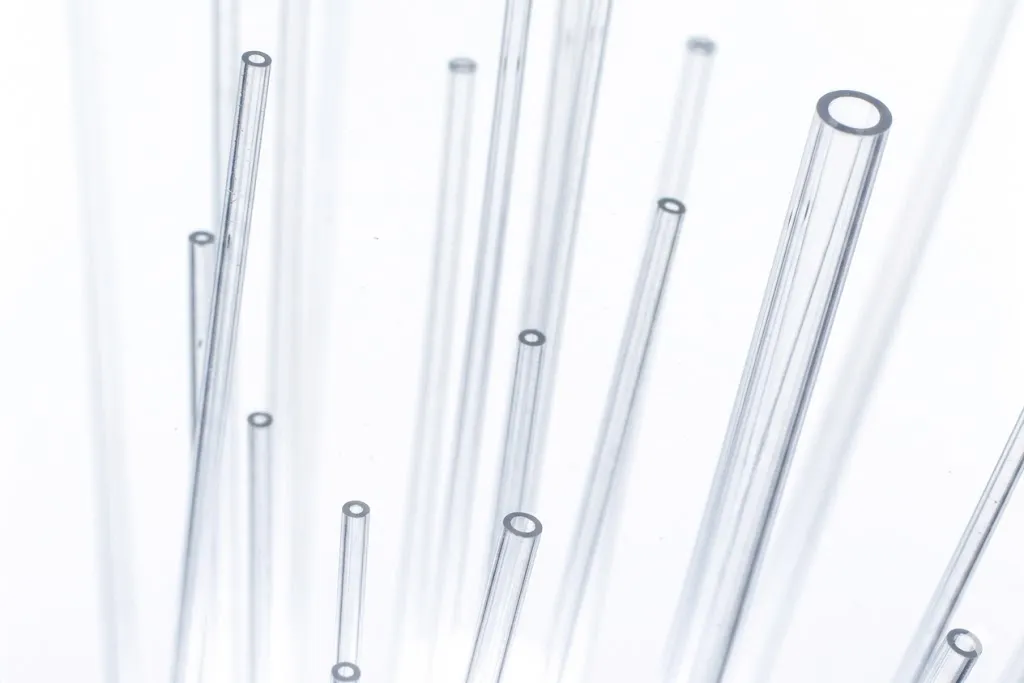
Shanghai CAREWE MEDICAL has developed a proprietary process for manufacturing ultra-thin wall heat shrink tubing made from polyester (specifically polyethylene terephthalate, or PET) that has extraordinary tensile strength even with walls as thin as 0.00015 inches.
This article will give medical device engineers ideas for applications that are well suited for ultra-thin wall PET heat shrink tubing:

Tubing bundled with clear heat shrink tubing
1: Variable stiffness conduit
2: Protective cover/coating and bundling
3: Reinforcement
4: Tube marking and printing
5: Electrical insulation
Application 1: Variable Stiffness Catheters
Due to its ultra-thin wall, PET heat shrink tubing can be used to increase the stiffness of catheters without significantly increasing the profile of the device. By using different thicknesses of heat shrink tubing along the length of the catheter, you can achieve varying degrees of flexibility for improved control of the device.
For example, you could use heat shrink tubing with a 1 mil wall at the rear end of the catheter, a 0.5 mil wall in the middle, a 1/4 mil wall near the end, and no wall at the tip to achieve complete flexibility.


Application 2: Protective Covering/Coating and Bundling
PET heat shrink tubing is commonly used to cover laser-cut hypotubes, braided catheter shafts, spring coils, radiopaque marker bands, and other components that require a thin but very strong outer layer. The tubing provides a smooth transition over sharp edges and can be sealed to prevent fluid leaks. PET heat shrink tubing can also be used to cover tapered structures, such as tapered coils, that cannot be easily covered using traditional techniques.
In addition, you can use PET heat shrink tubing to bundle and compress components such as plastic and metal tubing, wires, and fiber optics into the smallest possible space. Ultra-thin wall tubing allows you to reduce device size or increase device functionality without increasing the profile. For example, using PET heat shrink tubing to bundle components can free up enough space to add another working channel within an endoscope.
Another use for PET heat shrink tubing is bundling common plastic and metal tubing to create fast, low-cost multi-lumen tubing without expensive tooling and long lead times.

White heat shrink tubing applied to the end of the latex balloon to act as a hose clamp
Application 3: Reinforcement
With its high hoop strength, PET heat shrink tubing can provide effective reinforcement. For example, for balloon catheters, you can apply a narrow strip of heat shrink tubing to the end of the balloon to clamp the tube like a mini hose clamp, strengthening the bond and helping to prevent the balloon from failing under pressure. It also provides a smooth transition without significantly increasing the bond diameter.
In reinforced tubing with a braid, PET heat shrink tubing can contain the braid at the end and prevent it from unraveling or piercing the thermoplastic layer without significantly increasing the profile.
Application 4: Tube Marking and Printing
You can easily add deep markings and printing to catheters and metal shafts with PET heat shrink tubing. Simply order custom printed heat shrink tubing and apply it to your product. This avoids sending the actual device to a printer for marking or bringing printing inks and solvents into a manufacturing facility for in-house printing.
Manufacturers who print directly on their products can use clear PET heat shrink tubing as an ultra-thin protective layer over the printed area.
Application 5: Electrical Insulation
Due to its high dielectric strength, PET heat shrink tubing is an effective electrical insulation material with minimal added size due to its ultra-thin walls. For example, you can use it over needles to protect the skin surface from burns during electrical stimulation, or to insulate electrosurgical equipment, electrical components, and wiring on catheters and other products.
PET is the only heat shrink tubing thin enough to replace the electrical insulation coating process on metal shafts, including needles. Using PET greatly reduces the chance of pinholes forming on the coating surface, resulting in a repeatable, consistent, and effective alternative that eliminates the solvents and chemicals associated with the coating process.

Black and clear heat shrink tubing for electrical insulation of electrosurgical and ablation equipment
Summary
These are just a few of the many applications that take advantage of the unique properties of PET heat shrink tubing. Other tubing is too thick, or lacks strength or other features. The ultra-thin yet strong wall of this tubing makes it an excellent material for engineers designing and manufacturing medical devices to meet the needs of today's market and tomorrow's patients.
Shanghai CAREWE MEDICAL has a wide variety of PET heat shrink tubing in stock and ready to ship. Visit our online catalog or contact us to discuss how PET heat shrink tubing can make the most of your application.