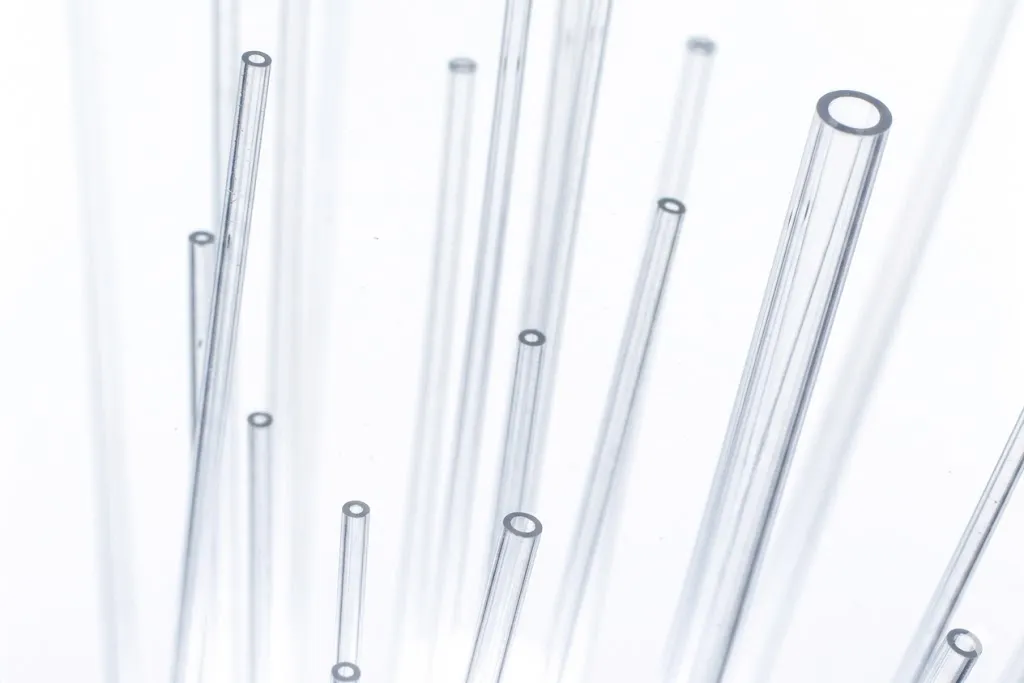
Shanghai CAREWE heat shrink tubing provides a suitable method to apply tight protective sheathing to components that can withstand extreme heat, moisture, corrosion, impact and other harsh environmental conditions. Heat shrink tubing prolongs the life of the protected components and helps maintain their performance. G-APEX heat shrink tubing is widely used in automotive, optical, medical, electrical, aerospace and chemical fields.
Fluorinated ethylene propylene (FEP) heat shrink tubing is favored mainly because of its low shrink temperature compared to other heat shrink tubing such as PTFE. FEP has high lubricity, optical clarity and better flexibility than PFA. FEP heat shrink tubing is often selected because it is lower in cost and suitable for applications that do not require a large heat shrink ratio.
Shanghai CAREWE heat shrink tubing is delivered in an expanded state. After a short heating, the heat shrink tubing will firmly wrap around the most complex and uneven shapes to form a completely sealed cover. 2:1 FEP heat shrink tubing has a stronger shrinkage ability than any other FEP heat shrink product. The heat source and heating method are optional.
Shrinkage and Recovery Ratios
The shrinkage ratio is the ratio of the final diameter of the heat shrink material after unrestrained shrinkage to the original diameter of the material before shrinkage. After shrinkage is complete, the material is said to be in a "recovered" or "recovered" state. Therefore, the final size of a shrink is usually the recovered or fully shrunk size.
For example, for a heat shrink material with a 2:1 shrinkage ratio, the final diameter of the material after full shrinkage will be reduced to 1/2 of the pre-shrinkage diameter. In other words, the pre-shrinkage material's primary diameter will be 2 times the fully shrunk (recovered) material's diameter; their diameter ratio (pre-shrinkage: post-recovery) will be 2:1.
Remember that heat shrink is usually applied to a material or part to encapsulate it; therefore, in practical applications, its full shrinkage needs to be controlled.
The shrinkage ratio is a critical number for all applications and depends on how uneven the part or item is to be covered. Parts with asymmetrical shapes require a larger shrinkage ratio of the covering material to achieve a more complete or detailed encapsulation. Conversely, more uniform parts, such as wires or cylinders, require a smaller shrinkage ratio to achieve full coverage. Tapered parts require careful consideration: Although the shape may appear more or less uniform, the taper must be considered when selecting heat shrink material and its shrink ratio.
Shanghai CAREWE heat shrink tubing is available in 1.3:1, 1.6:1 and 2:1 shrink ratios, with options in fractional sizes or American Wire Gauge (AWG4). This heat shrink material has the same high standards and properties as FEP. Individualized micro sizes and other custom specifications and tolerances are also available upon request.
Applications
Encapsulation – For periodic protection and covering of critical components, FEP heat shrink tubing may be the perfect choice for the user's application as its heat shrink temperature, cost and other characteristics are similar to more expensive items. FEP 2:1 heat shrink tubing, covers the widest range of component shapes. FEP heat shrink tubing is frequently used to cover items such as roll covers, hoses, temperature probes, medical devices, cables and wires, lighting, to name a few. The transparency of FEP heat shrink tubing allows the covered components to be observed during operation and protects them from moisture, heat, heat and chemicals.
Insulation – FEP's excellent dielectric properties make it ideal for encapsulating and insulating electrical components including solenoids, lithium batteries and alkaline batteries. FEP heat shrink tubing's heat resistance allows it to continue to function in these environments and higher.
Wire harnessing – FEP heat shrink tubing has excellent dielectric properties, making it an ideal choice for covering cables and wires, and can even withstand splicing. Once covered, FEP heat shrink tubing can also be used as an insulation material, even when bare wires are present.
Heat shrink tubing used in the medical technology industry must meet ISO 10993 biocompatibility requirements. Whether you need just a catheter or a complete medical device integration solution, we have the engineering expertise, manufacturing capabilities and products to simplify your supply chain. Your medical device needs can be met in-house by one company, and we can also customize our products to your requirements.
Shanghai CAREWE Medical Heat Shrink Tubing Advantages
Wall thickness as thin as 0.25 mm
Peelable heat shrink processing aids
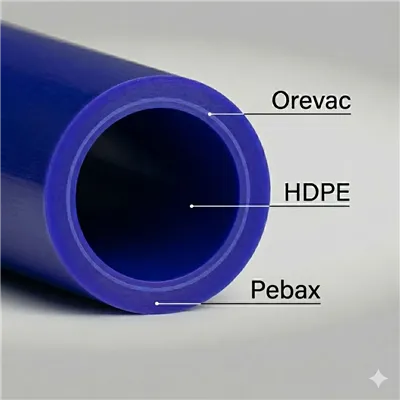
Single and double wall structures, including adhesive linings
Controlled longitudinal variation
Shrink ratio up to 5:1
Custom cutting and slitting
Shanghai CAREWE Medical Tubing Features
Unique formulations to meet a variety of medical applications
Custom compound development
Strong and chemically resistant materials
High stability and high temperature resistance
Compliant with RoHS, USP Class VI biocompatibility and ISO 10993 standards