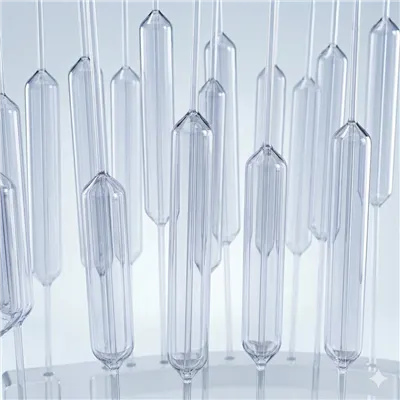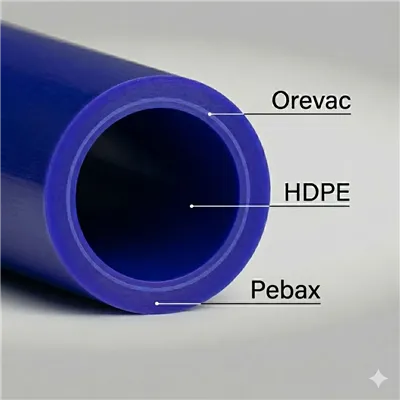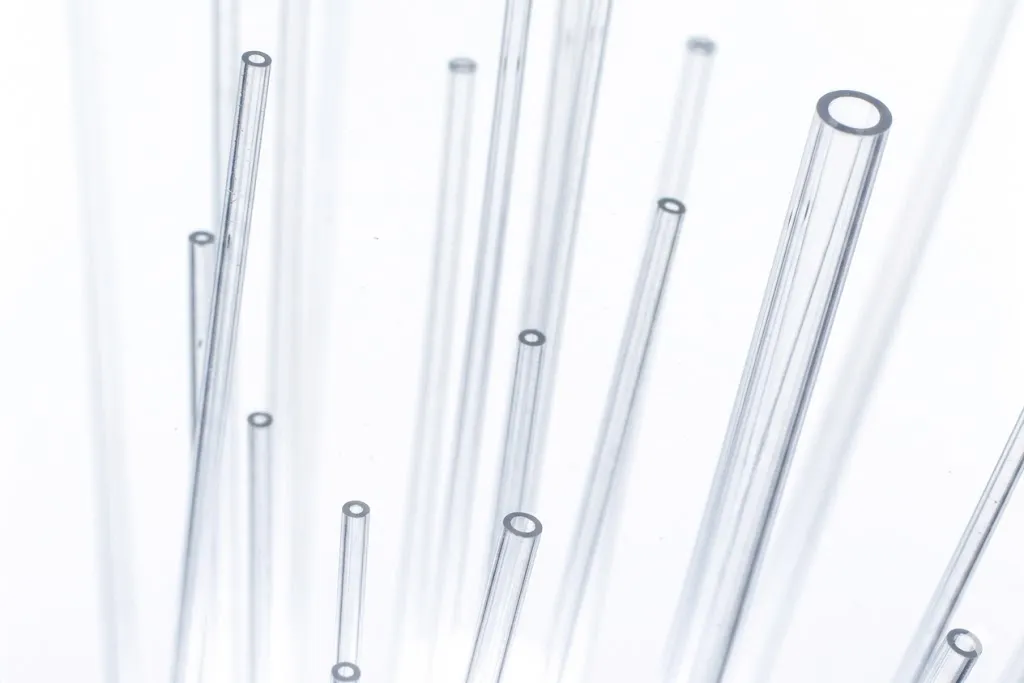
Fluoropolymers are widely used in the field of vascular intervention due to their good lubricating properties, such as PTFE Liner, FEP heat shrink tubing, and PTFE heat shrink tubing. In some application scenarios, while utilizing the lubricating properties of fluoropolymers, it is hoped that they will have good adhesion to other polymer materials, so this requires etching treatment. Today, Shanghai CAREWE Medical will briefly introduce the product processing and etching treatment of fluoropolymer PTFE medical catheters.
01 Application of PTFE lining in minimally invasive medical treatment
PTFE liners are a major breakthrough in the medical field, enabling doctors and researchers to use them for a wide range of applications. They are made of lightweight and extremely durable materials. It has been used to make instruments and other medical tools for decades. You must be wondering how PTFE liners are designed and their applications in the medical field.
PTFE liners are designed using polytetrafluoroethylene polymers because of their special functions. Polytetrafluoroethylene is used as a catheter lining because it has a smooth, low-friction surface that helps reduce the risk of infection and tissue damage. They are also biocompatible, so most people will not have allergic reactions or any adverse reactions. But PTFE cannot be melt processed, but professionals have developed a form that can be melt processed, which is FEP. FEP is fluorinated ethylene propylene, which has exactly the same properties as PTFE, but has a low heat shrink temperature and is UV resistant, making it ideal for designs that require high clarity, chemical resistance, and relatively low hardness. In addition, since PTFE is extremely slippery, it needs to be etched in some cases. This etched PTFE easily bonds with other polymers and can be used in various manufacturing processes. A mixture of sodium and ammonia can be used to etch PTFE. So, these are the reasons that make it a fairly well-known commercial polymer.
The wide range of uses for PTFE lined tubing includes: guide catheters, deflectable catheters, steerable catheters, device delivery systems, and more!
PTFE Liners: Amazing Benefits!
In recent years, PTFE liners have revolutionized the medical field. These liners can be used in a variety of medical procedures, including joint replacement surgery and cardiovascular interventional procedures.
① PTFE liners are extremely durable and can withstand extreme temperatures, making them ideal for minimally invasive medical procedures.
② PTFE liners can be easily molded into any shape, making them ideal for complex medical procedures.
③ These liners are made of Teflon, which is known for its strength and non-stick properties, making them ideal for use in sensitive medical environments.
④ PTFE liners are also resistant to most chemicals, making them a safer choice for the production of medical devices or components.
⑤ They are extremely lightweight, easy to install in narrow areas with limited access, and can be used in many different types of medical devices.
⑥ They provide excellent protection against severe wear and tear during frequent use. This makes them useful in medical devices such as catheters, stents and guidewires, which require reliable protection against wear and damage.
02 Common domestic product processing of PTFE lining
The production methods of PTFE lining (PTFE Liner) are currently mainly three: dip coating process, free extrusion process, and mandrel extrusion process. The product characteristics of PTFE Liner products produced by different processes are slightly different; the manufacturer's preparation process is unique and has its focus:
① Production process: dip coating production process-surface etching treatment!
Product features of dip-coated PTFE Liner with mandrel (common domestic product features: minimum wall thickness is 0.0002", ID: 0.3-3.0mm)
②Production process: free extrusion process--surface etching treatment;
Product features of domestic medical free extrusion PTFE Liner: minimum wall thickness is 0.001'', ID: 0.026" to 0.445" (0.66mm to 11.3 mm); when used in different occasions, the inner diameter size can be customized according to the actual size!
③Production process: extrusion with mandrel and free extrusion process--surface etching treatment or surface with ultra-thin thermoplastic bonding layer;
Common domestic product features and levels: (1) Extrusion with mandrel--surface etching treatment;
1) Wall thickness is 0.001", ID: 0.012" to 0.092" (0.305mm to 2.337 mm), wall thickness tolerance is: 0.00025'' (0.00635mm);
2) Wall thickness is 0.00075", ID: 0.012" to 0.092" (0.305mm to 2.337 mm), wall thickness tolerance is: 0.00025'' (0.00635mm);
3) Wall thickness is 0.0005", ID: 0.012" to 0.042" (0.305mm to 1.067mm), wall thickness tolerance: 0.00025'' (0.00635mm);
(2) Production process: Dip coating production process--surface etching treatment or surface with ultra-thin thermoplastic bonding layer;
Common domestic product features and levels:
Minimum single wall thickness is 0.0003'', ID: 0.002''-0.0910'' (0.508mm-2.311mm); wall thickness tolerance: 0.00019'' (0.005mm)
Features of thermoplastic bonding layer: The existence of the bonding layer can improve the bonding force between the inner liner and the outer tube of the catheter after the rheological process. At the same time, the inner liner with bonding layer can increase the ultimate breaking force by 40%. The thickness of the thermoplastic bonding layer is about 0.004mm.
The most commonly used etched pipe fittings for vascular interventional catheter products are PTFE Liner.
03 Fluoropolymer Etching Treatment
PTFE Liner will turn brown after etching. For details, please refer to the article about PTFE Liner Etching Treatment. The following pictures show the comparison of PTFE Liner before and after etching. In fact, PTFE Liner after extrusion or dip coating is milky white or transparent (as shown in Figure 1), and it will turn brown after chemical etching (as shown in Figure 2)!


FAQ
Q1: Why do you need to etch fluoropolymer fittings?
Fluoropolymers, such as PTFE, FEP, and PFA (often referred to as Teflon), are very smooth. This lubricity and the composition of fluoropolymers reduce their adhesion; etching can change the surface properties of fluoropolymers so that they can be bonded with conventional polymer adhesives;
Q2: How to perform etching?
Etching is the process of sodium solution and fluorine molecules on the surface of fluorine-containing fittings being stripped from the carbon chain of the fluoropolymer, which makes the carbon atoms have insufficient electrons. When the etched material contacts the air, oxygen molecules, water vapor, and hydrogen can reduce the electrons. The result of this reduction process is a group of organic molecules that are responsible for adsorption tasks; thus ultimately achieving the etching effect;
Q3: Will etching change the performance of the fittings?
The etching process only acts on the surface at a depth of a few angstroms, so it has almost no effect on the performance of the pipe fittings, and has almost no effect on the size of the pipe fittings; however, the etching process will make the surface of the material black, usually with a slightly brown or tan color, and the etching process will also reduce the lubricity of the surface of the pipe fittings;
Q4: How to store etched fluoropolymer pipe fittings?
The etched fluoropolymer will "capture" molecules in the air to repair their electron deficiency, which will lead to a decrease in surface etching performance. In view of this, all etching materials should be stored in their original black sealed bags to avoid being exposed to ultraviolet rays and reducing performance;
Q5: Does the darker color of the etched pipe fitting surface mean better etching effect?
Not necessarily. Color is not an absolute indicator of etching quality. For this reason, suppliers will include etching certificates with each batch of etched pipe fittings shipping documents;
Q6: How to test the etching effect?
The etching material is tested by the contact angle method. The contact angle measurement of the droplet on the collective surface is used to verify the wettability of the surface, as shown in the figure below: The contact angle is defined as the angle between the substrate support surface and the tangent line of the contact point between the droplet and the substrate. In the figure, "B" has a better etching effect than "A";
Manufacturers generally conduct contact angle tests on etched pipe fittings and provide a certificate of conformity with the material. If the customer needs it, the supplier can also be asked to provide the test results;
Q7: How long is the shelf life of etched pipe fittings?
If stored properly, the shelf life of many etched products is almost unlimited, but the purchased products should comply with a good inventory system, be used in order of inventory, and require that the inventory be used up as soon as possible.

Contact angle method to measure etching effect